If you have searched for “Wi-Fi vs Etherne”, you are probably trying to solve a familiar problem: a channel plays perfectly one evening, then buffers or drops in quality the next. For IPTV viewers, the connection between your router and streaming device can matter just as much as the broadband package coming into your home.
The direct answer is that Ethernet usually gives you smoother IPTV streaming because it avoids much of the interference and signal variation that affect Wi-Fi. A well configured Wi-Fi connection can still work brilliantly, particularly when your device is close to the router and your household is not putting heavy demands on the network.
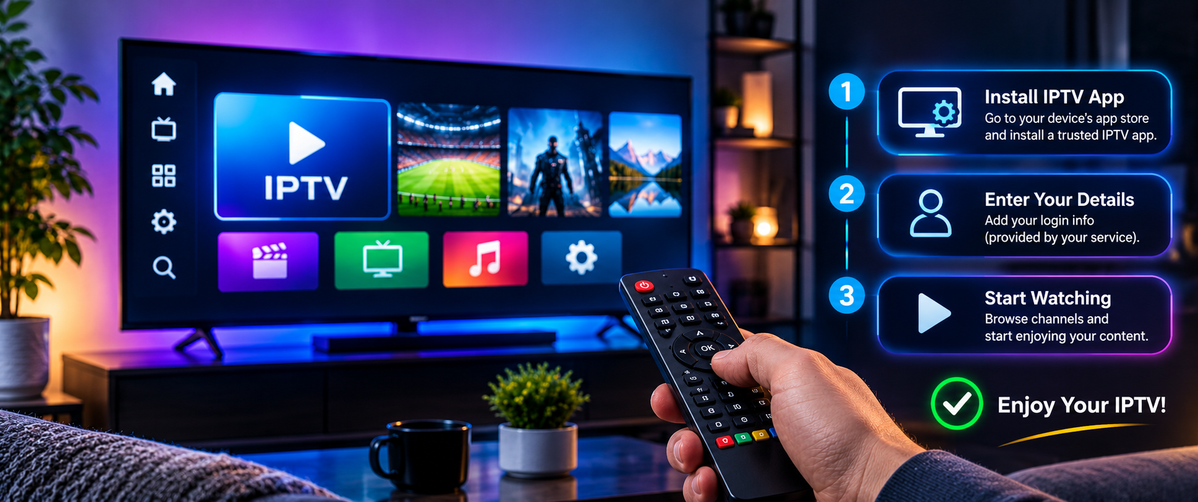
When choosing IPTV services online, it is worth checking whether your home setup can deliver a steady connection to the device you actually use. This guide explains how to get the best viewing experience with Hyperview TV, whether you watch through a smart TV, streaming box or another compatible device.
Wi-Fi vs Ethernet Which Is Better for Smooth IPTV Streaming?
That does not mean every Wi-Fi viewer needs to run a cable across the living room. If your Hyperview TV viewing device has a strong wireless signal and programmes play consistently, there may be little noticeable benefit from changing your setup.
The right choice depends on where you watch, the quality of your broadband and what else is happening on your home network. A single HD stream places different demands on a connection from a busy household watching several streams at once.
How Your Internet Connection Affects IPTV Quality
IPTV needs data to arrive consistently. A speed test might show plenty of download capacity, yet brief drops in connection quality can still cause a live stream to pause while your device refills its buffer. Download speed is only part of the picture.
Latency describes how long data takes to travel, while jitter describes changes in that timing. Packet loss occurs when some data fails to arrive. A connection with low packet loss and stable performance often feels better for streaming than one with impressive peak speeds that fluctuate.
Think of the journey in two parts. Your broadband connects the home to the internet; Wi-Fi or Ethernet connects your router to the viewing device. If broadband is struggling, changing from Wi-Fi to Ethernet may not solve the underlying problem.
Wi-Fi Streaming Convenience Without Cables
There is no cable to route around furniture, making wireless particularly useful in bedrooms or spaces far from the router. Its performance depends on signal strength, interference and the number of devices competing for airtime. Other wireless networks, thick walls and nearby electronics can all affect the connection, even when your broadband package is fast enough for IPTV.
The wireless band matters too. The 2.4 GHz band generally reaches further but is often more congested. The 5 GHz band can offer stronger performance at shorter range. A 6 GHz connection may also work well with compatible equipment, although its useful range can be limited. Choose the band that stays stable at your TV, rather than simply selecting the one with the highest advertised speed.
Ethernet Connection Reliable Streaming With Less Interference
Ethernet connects a compatible streaming device directly to a router or network switch. Because it does not rely on a radio signal, household wireless congestion and walls have far less influence on playback.
This makes it especially useful for a main television that rarely moves. If your router is close enough to run a cable neatly, Ethernet is often the simplest way to remove uncertainty about the local wireless connection.
A suitable, undamaged cable and properly connected ports are more important than paying extra for a cable with specifications your devices cannot use.
Buffering, Lag and Picture Quality Compared
Buffering happens when the device cannot receive enough data to keep playback going. On Wi-Fi, this may happen when a weak signal deteriorates further or several devices become active at once. Ethernet reduces those local wireless risks, but it cannot prevent buffering caused by broadband problems or an issue with the stream itself.
Picture quality can change for a similar reason. Where a player adjusts quality to suit the available connection, unstable delivery may produce a softer image before a pause becomes obvious. A steadier connection gives the player a better chance of maintaining the available picture quality.
Lag is more noticeable when changing channels or starting playback. If menus respond normally but the programme takes time to begin, do not assume Wi-Fi is the only cause. Compare several channels and test the same device using Ethernet where possible. That tells you more than a speed test taken on a phone in another room.
Which Connection Handles 4K IPTV Better?
Ethernet is usually the safer choice for 4K viewing because higher resolution streams can need more sustained bandwidth than HD. A brief wireless slowdown that goes unnoticed during a lighter stream may be enough to affect a demanding one.
As a practical starting point, around 25 Mbps of available download capacity is commonly recommended for a single 4K stream, although actual requirements vary with the content and device. Other people using the connection will need capacity as well. A fast broadband package is helpful, but the speed reaching your TV is what matters.
If the content available through your Hyperview TV setup supports 4K, try the stream at your usual viewing time. A stable 5 GHz connection near the router may be entirely adequate. If the picture repeatedly drops in quality or playback pauses, Ethernet is a sensible next test before changing broadband packages.
How Distance and Network Traffic Affect Wi-Fi
Wireless performance can change dramatically between rooms. A TV on the far side of a solid wall may have a weaker connection than a phone sitting near the router, even though both show that they are connected to the same network. Network traffic matters as well.
Cloud backups, game downloads, video calls and other streams can compete for your available broadband capacity. On Wi-Fi, devices also share wireless airtime, so a busy home can put pressure on both parts of the connection.
If moving the router is an option, place it in an open position rather than behind the television or inside a cupboard. For rooms that remain difficult to reach, a properly positioned mesh system can improve coverage. Where practical, connecting the main viewing device by Ethernet leaves more wireless capacity for phones and tablets.
Does Ethernet Deliver More Consistent Streaming Speeds?
Generally, yes. Ethernet usually keeps the connection between router and viewing device more consistent because there is no wireless signal to weaken as people move around the house or neighbouring networks become busy.
Consistency does not mean unlimited speed. Your device port, network equipment and broadband connection still set limits. Even so, a standard Ethernet connection is typically more than capable of carrying an individual IPTV stream when the rest of the setup is working properly.
To judge the difference fairly, test Wi-Fi and Ethernet on the same viewing device, using the same content at similar times. If both perform poorly, investigate your broadband or the specific stream. If Ethernet is smooth while Wi-Fi struggles, the local wireless connection is the likely place to focus.
Best Router Settings for Better IPTV Performance
Start with the basics: keep your router software up to date and use its recommended security settings. Updates can improve reliability, while a secure network helps prevent unwanted devices from using your bandwidth. If your router offers separate wireless bands, test your viewing device on 5 GHz when it is close enough for a strong signal.
Some routers provide Quality of Service settings that let you prioritise a TV or streaming box. This may help when other household activity competes with IPTV, but it cannot create bandwidth your broadband connection does not have. Change one setting at a time and test again, so you know which adjustment made a difference.
Simple Ways to Improve Your IPTV Connection
You do not need to replace every piece of equipment to improve streaming. Start by checking whether the problem affects all programmes, one device or the whole household. This helps you avoid spending money on the wrong solution.
IPTV Connection Checklist
☐ Test playback at the time buffering usually happens.
☐ Check the connection on the TV or streaming device, not only on a nearby phone.
☐ Pause large downloads and cloud backups, then try the same programme again.
☐ Move the router into an open position if its current location blocks the signal.
☐ Try a suitable wireless band with strong coverage at the viewing device.
☐ Restart the router and streaming device if either has become unresponsive.
☐ Check that device software and router software are up to date.
☐ Test a direct Ethernet connection to identify whether Wi-Fi is the problem.
Keep a note of when interruptions occur and whether they affect particular channels. Clear observations are useful if you need help with your broadband or your Hyperview TV viewing setup.
When Should You Switch From Wi-Fi to Ethernet?
Switch when your viewing device is in a fixed position and wireless interruptions keep returning despite sensible adjustments. Ethernet is particularly worthwhile if HD plays acceptably but higher quality content struggles, or if buffering gets worse whenever the household network becomes busy.
It is also a good diagnostic step. You do not have to commit to permanent cabling immediately: a temporary cable test can show whether removing Wi-Fi improves playback. If it does, you can decide whether a neat permanent cable route is worthwhile.
Choosing the Best Setup for IPTV Streaming
For the smoothest IPTV experience, choose Ethernet for a compatible device that stays beside your main television. It offers the most predictable connection between your router and screen, which is especially helpful for busy households and demanding streams.
Choose Wi-Fi when you need flexible placement and have strong, stable coverage. If playback becomes unreliable, test the connection at the viewing device before assuming your broadband package or IPTV service is at fault. The best setup for enjoying Hyperview TV is the one that remains steady during your normal viewing hours.
Final Thoughts
Smooth IPTV viewing depends on a reliable path from the internet to your screen. Ethernet removes many common wireless obstacles, while well planned Wi-Fi remains an excellent option where cables are inconvenient. A short test on your usual viewing device is the clearest way to decide which connection works best in your home.